Fluid levels
Follow Congestion Index, weight, and impedance trends to help assess volume status.

FDA-cleared Bodyport Cardiac Scale
Heart failure monitoring that sees what
weight alone may miss.

2×
Higher sensitivity
70% vs. 35% with standard weight rule
38%
Fewer alerts
2.58 vs. 4.18 alerts per patient-year for weight rule
14
Day lead time
Average before an heart failure event
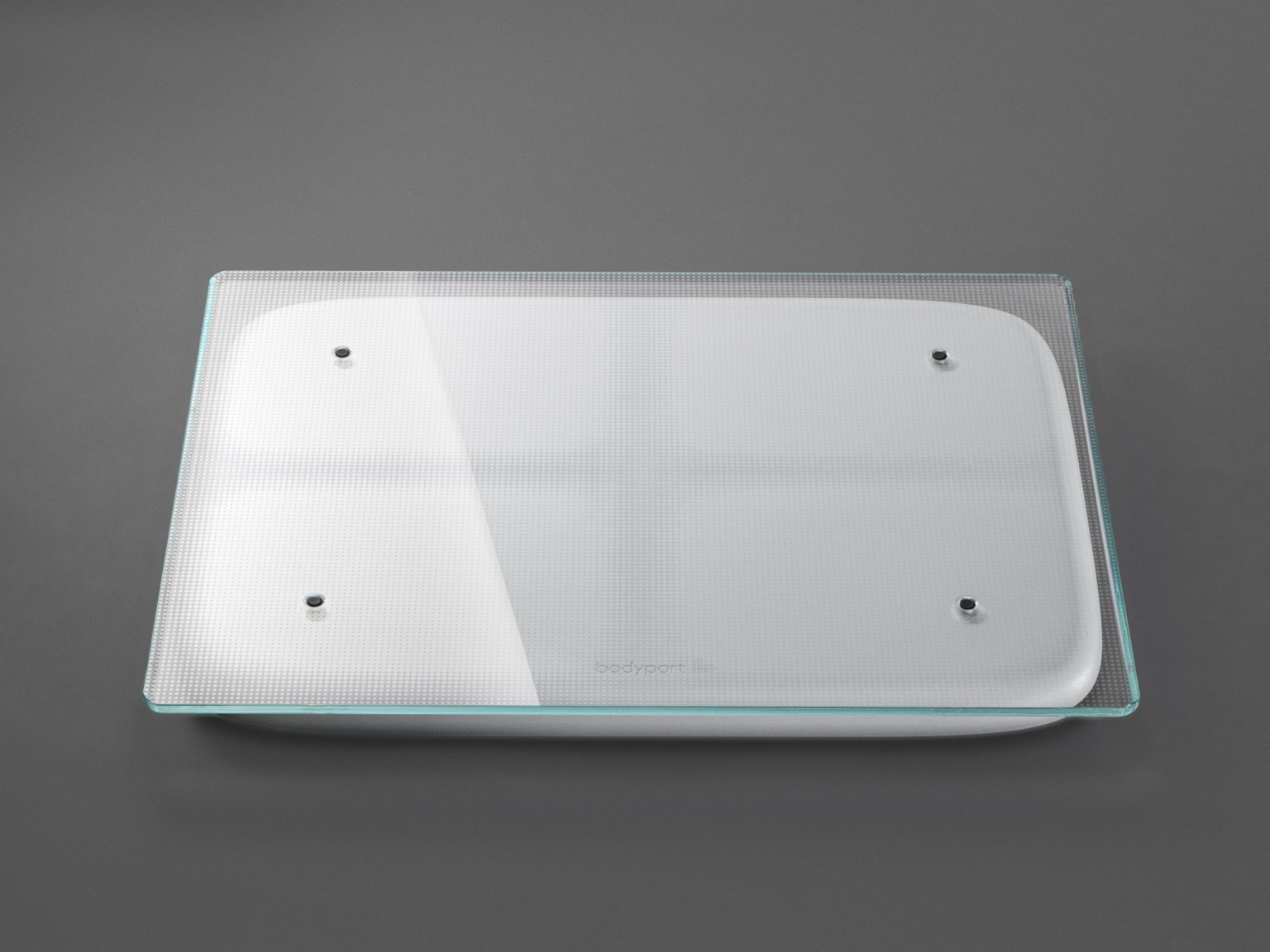
Patients take a daily measurement by stepping onto the Cardiac Scale.
The scale measures weight, peripheral impedance, pulse rate and balance, and captures bioimpedance phase angle.
Readings are sent over a cellular connection to the care team.
While standing on the Bodyport Cardiac Scale for less than 30 seconds, key measures of weight, peripheral impedance, pulse rate, and center of pressure are captured and automatically transmitted over cellular without the need for home wifi or a dedicated app.

The Bodyport Congestion Index combines weight and peripheral impedance measurements to track changes in fluid status over time, helping care teams identify trends that weight alone may miss. Additional cardiac and health metrics provide clinical context to help interpret these changes and support more informed care decisions.
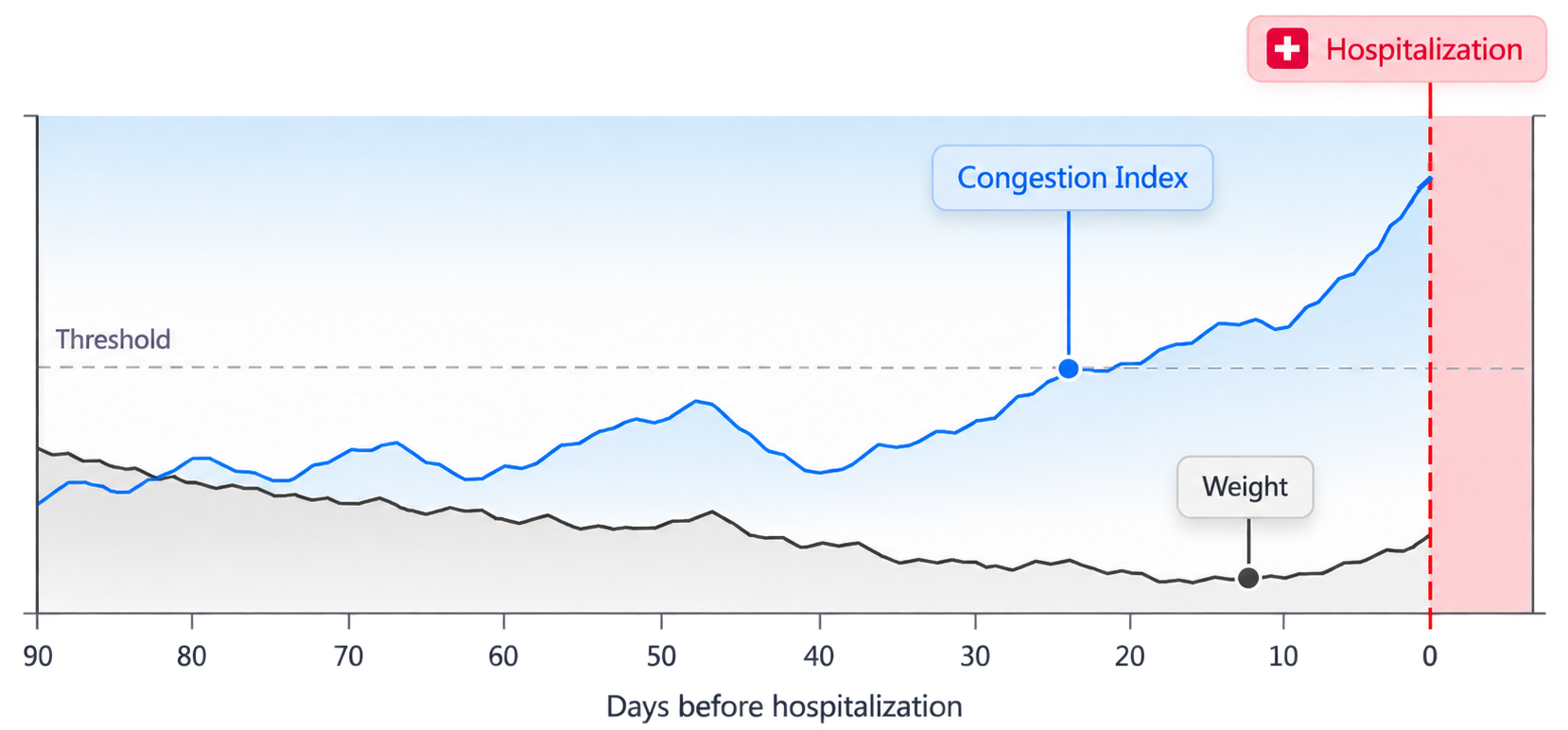
Follow Congestion Index, weight, and impedance trends to help assess volume status.
Pulse-rate patterns add clinical context alongside fluid-related changes and symptoms.
Measure of cellular integrity associated with frailty and risk of heart failure hospitalization.
Read our study →Use Bodyport as a standalone heart failure monitoring platform or easily integrate data through our simple API into existing workflows, including Epic and other RPM systems. Bodyport also supports billing under applicable remote physiologic monitoring (RPM) CPT codes for eligible services.


✓
SOC 2
TYPE II REPORT
CLINICAL & RESEARCH COLLABORATORS



INVESTORS



We use your information to respond to your inquiry. Privacy Policy


